 01
Shaped by hand
The clay is thrown on the wheel and shaped by hand into everything from plates and bowls to vases and jugs.

Grottaglie · Puglia
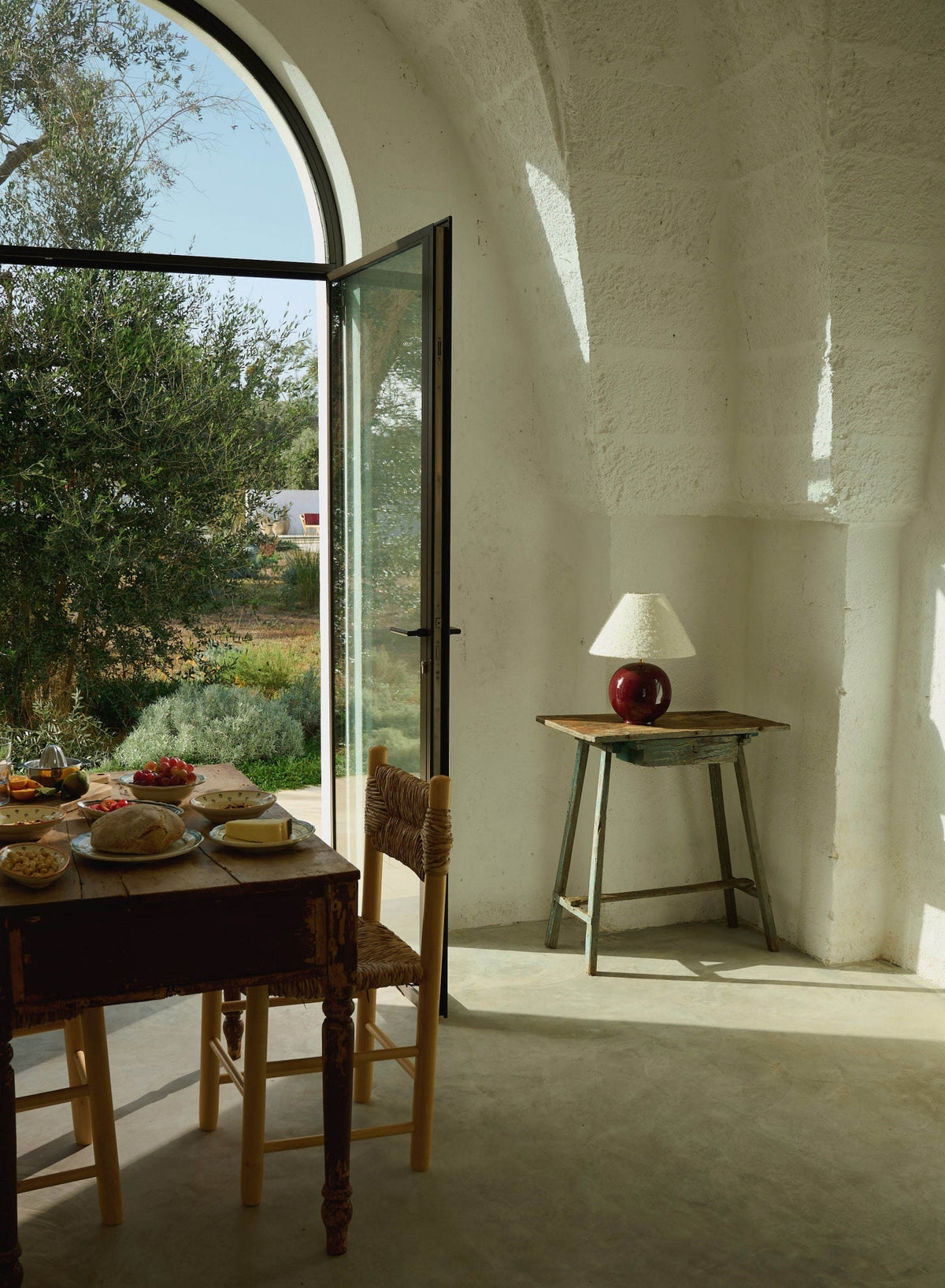
Among the low hills, sun-bleached houses and limestone ravines of southern Puglia lies Grottaglie – a town that has lived on ceramics for centuries.
A handful of families have thrown, glazed and painted here for some 400 years, and the Fasanos are one of them. The workshop Ceramiche Nicola Fasano was founded in 1968 by the ceramicist Nicola Fasano and is today the largest in town.
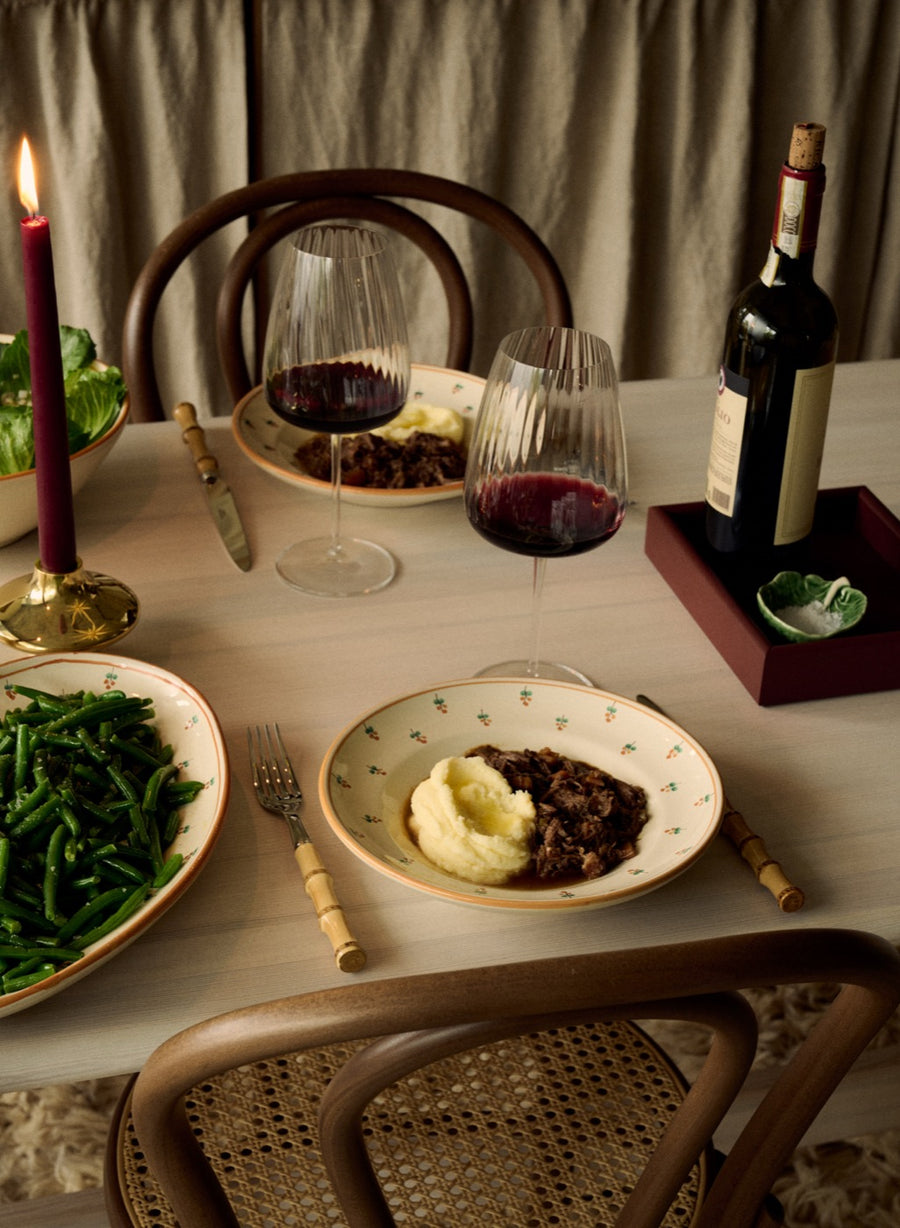
Every plate, bowl and vase is shaped, glazed and painted by hand. No two are alike.

Behind the medieval castle lies Grottaglie's ceramics quarter. The workshops and kilns were once dug into the limestone, and today the town has more than fifty workshops. Outside the doors, plates hang in long rows on the walls.
On balconies and window sills all over Puglia stands the little bud called pumo – a symbol of good fortune and new life. It is still made by hand in Grottaglie, as are amphorae, jugs and vases.

Today the workshop is run by Nicola's eldest son Franco together with his wife Filomena and their daughters Carmen and Nicoletta. Nicola's siblings and their children are still in the craft too – many with workshops of their own in town.
The family feeling and the passion for the craft are in the walls, and Italian pride leaves its mark on everything that leaves the workshop.
“Every piece is unique and made with care.”
The clay comes from Tuscany. It is shaped by craftspeople with long experience, and it takes several weeks from the workbench to your table.
01
The clay is thrown on the wheel and shaped by hand into everything from plates and bowls to vases and jugs.
 02
The pieces dry in the air. In summer it takes barely a week; when the air is humid, 20–30 days. Slow drying makes them strong.
 03
Once dry, the pieces are fired in the kiln at around 1000 degrees.
 04
Each piece is dipped by hand in tubs of glaze and set out to dry in long rows.
 05
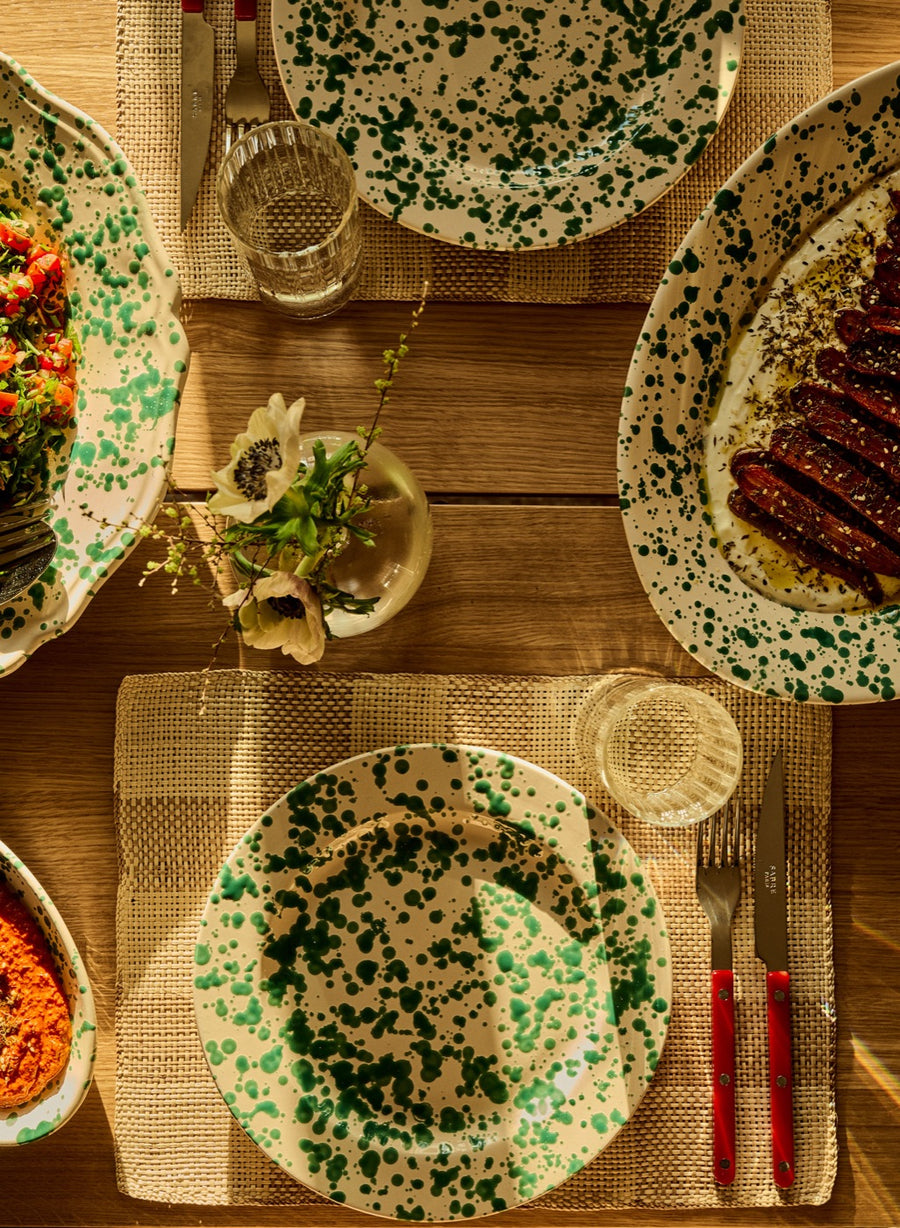
The patterns are painted by hand – from the traditional to the new. In Puglia the colour was traditionally flicked on with sprigs of thyme or olive, and that is where Spruzzi comes from.
 06
Back into the kiln. Only now do the colours get their shine.
“Spruzzi” means splashes. The colour is flicked on by hand, so the pattern is never the same twice. The series comes in several colours and looks just as good mixed as matched.